Bebop Jazz Piano Study
This time we're going to take a close look at Bebop Jazz Piano, one of the variations of jazz that has gained the most popularity over the last decade.
The most important jazz composers have found in this style a freer, more dynamic way to express themselves. This comes from the harmonic freedom that the musical form allows.
That's why we're going to take a look at Bebop jazz piano and also share the best method to begin your journey into this new way of expressing yourself through music.
What is Bebop Jazz Piano?
Bebop found its first voices in Ragtime and blues toward the end of the 19th century, in the sounds that African American musicians were experimenting with.
With rhythmic variations over 2/4 measures and by syncopating the strong beats, the feel of Bebop Jazz Piano began to take shape, though it hadn't fully come together yet.
Then came the early 1900s with New Orleans jazz, when Jelly Roll Morton, one of the most important figures in jazz, set out to find a new voice that soon caught on.
In this way, passing through Stride jazz and swing, Bebop Jazz Piano gradually developed into what it is today.
As a result, Bebop Jazz Piano is the fusion of at least five African American musical forms.
The best method for studying Bebop Jazz Piano
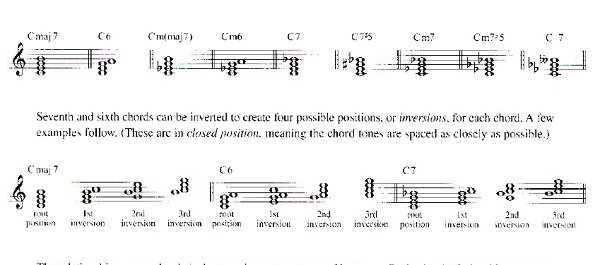
The great publishing house Hal Leonard is behind the best method for taking your first steps in Bebop Jazz Piano.
This book was written by John Valerio and features a dozen chapters that will lead you not only through the theory, but through the harmony and melody of Bebop Jazz Piano.
The Language of Bebop Jazz Piano
In this section you'll learn about the harmonic function associated with this style.
The major seventh and sixth chords, minor seventh, and seventh chords with a flatted fifth. You can use the harmonic function of C to build a useful sequence to get started.
Cmaj7 - Dm7 - Em7 - Fmaj7 - G7 - Am7 - Bm7b5
Harmonic Extensions
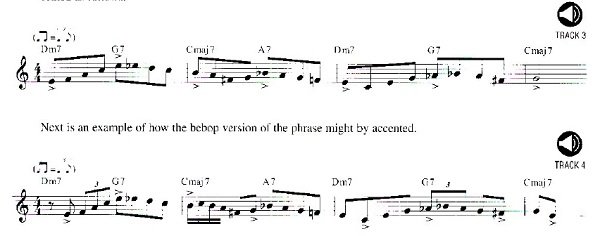
What makes Bebop Jazz piano so interesting is the extension of its chords, which can reach the major 9th, 11th, and even the 13th, with as many as six notes involved to create solid, compact, and varied voicings.
These chords can also be combined to produce flat 9ths and flat 5ths, among others.
Modal Alterations
Bebop Jazz piano stands out for covering a wide harmonic range that lets you dream in voicings. That's why this book is packed with chords of every kind so you can soar in the very first lessons.
Major ninth chords with harmonic variations such as sixths over ninths, elevenths, thirteenths over elevenths, and more.
Swapping Triads with Seventh Chords
In this book you'll discover a more practical and simple way to swap chords using inversions, so that with just a slight movement you can shift between them.
The aim of Bebop Jazz piano is to create strong harmonic relationships, but also to do so in the most ergonomic way possible so your hands don't suffer from the effort it takes.
In this way, each chapter is a different way of looking at the harmony and melody of Bebop, so that by the time you finish studying it, you'll have a solid foundation that's ready to take you off to explore new horizons.
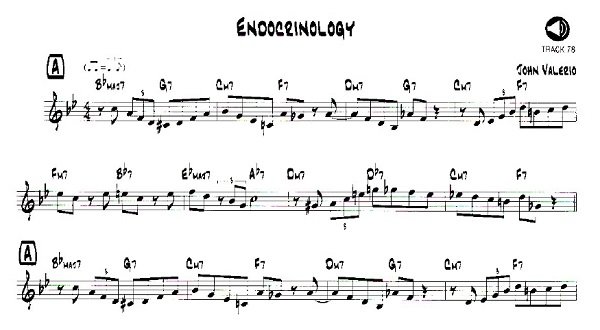
We're making it free for you to download this book in PDF format, which will undoubtedly be your best ally for studying Bebop Jazz Piano.