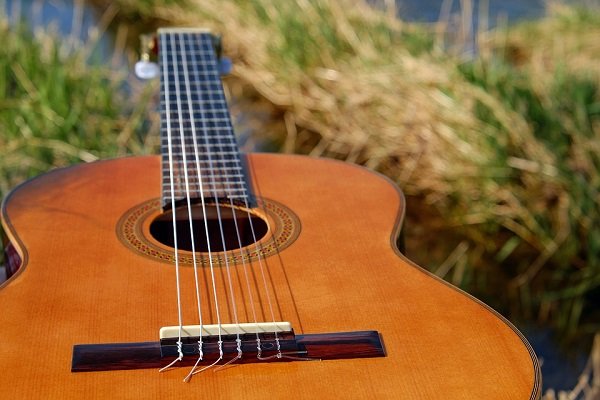
Studying the Prelude from Cello Suite No. 1
No, you can't truly call yourself a good guitarist until you can play the Prelude from Cello Suite No. 1 arranged for the chamber guitar.
This piece is required study for anyone who wants to reach a respectable level on the instrument. Whether for its contrapuntal challenges, its harmony, its tempo, or its expressiveness, this piece is a true work of art.
Of course, don't assume it's an overly complex piece either, because it really isn't. But even if you're considered a professional guitarist, you'll still need to put in a few hours to master every aspect of the Prelude from Cello Suite No. 1.
Johann Sebastian Bach
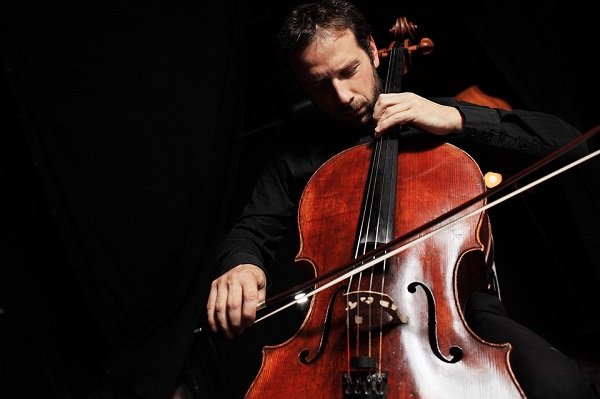
The Prelude from Cello Suite No. 1 is a piece written by the greatest master of all time, yes, we're talking about Johann Sebastian Bach.
The piece was originally written for the cello, but over time it came to be regarded as a masterpiece that deserves to be performed on every chamber-music instrument.
That's how it made its way to the guitar, and ever since, every student, and even the most seasoned professionals, have understood that this is a piece they simply have to study.
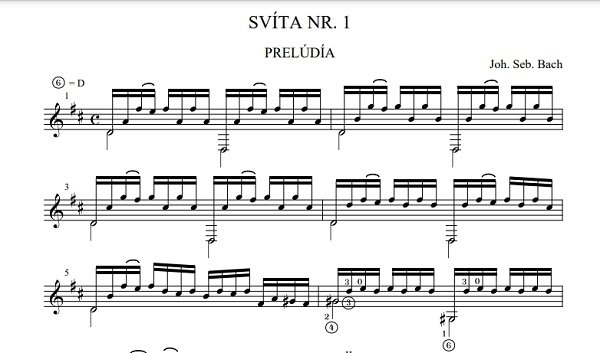
The Prelude from Cello Suite No. 1
The Prelude from Cello Suite No. 1 is about arpeggios, it's about counterpoint, it's about tempo, and it boasts a stunning harmonic richness.
So, to get the most out of your practice, you need to pay close attention to these aspects.
If you want to play this piece, then you'll need to tune the low E string down to D. You should also pluck the notes with your right hand, or picking hand, near the sound hole of the guitar so the tone comes out round, sustained, and rich in overtones.
Counterpoint
Counterpoint is the relationship between the musical voices, or notes, that creates a flowing, full, engaging, harmonious, and balanced conversation among all the parts.
For that reason, you should think of this piece as a conversation with a constant back-and-forth of phrases. It isn't a monologue; the idea is to understand that the bass strings state a phrase and open the door for the middle and treble strings of the guitar to respond.
Tempo
To play Bach's Prelude from Cello Suite No. 1, we recommend setting your metronome to 75 bpm. As you play, you'll keep a perfect subdivision in sixteenth notes.
For that reason, it's very important to control the movement of the tempo, because it stays constant. You can shape subtle dynamic nuances, but you should never slow the tempo down or rush it.
Harmony
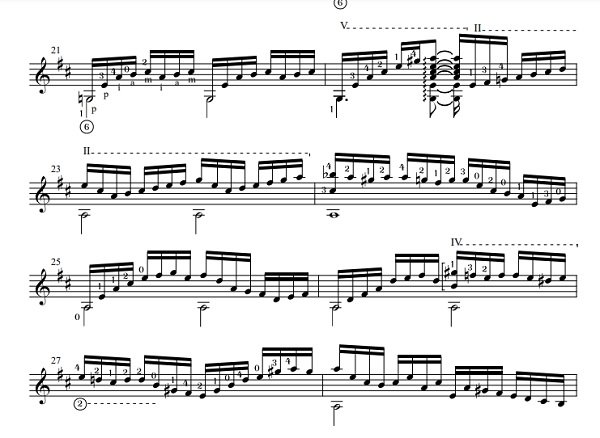
Harmonically, this piece is set in the key of D major, which is why the low E string is tuned down to D, since the goal is to give the sound greater depth.
This composition moves through every possibility of the harmonic function of D major. For that reason, each movement must be intentional so that the sound of every variation can be fully appreciated.
Achieving this won't be easy and will take plenty of practice time, along with a real awareness of what you're playing.
That's why we recommend that students first play each chord and its arpeggio separately so they become aware of the differences between the parts. Then, once you have all the sections of the prelude in hand, you'll be ready to put them together and play the whole piece.
As you already know, we're leaving you the audio and PDF file of the Prelude from Cello Suite No. 1 so you have audiovisual support while you study.