Music Theory for Beginners

The time has come to take your first steps with the best music theory for beginners.
While there are many excellent books in the academic literature, the truth is that the method written by Víctor de Rubertis is the most pedagogical of them all. It moves step by step and guides you so that you won't miss a single thing.
That's why we're going to dive headfirst into the music theory for beginners written by Víctor de Rubertis.
Who is Víctor de Rubertis?
Maestro Víctor de Rubertis is a contemporary Italian theorist and composer of classical music.
His drive to experiment and broaden his musical knowledge led him to settle in Buenos Aires, Argentina. There, at the National Conservatory of Music, he helped shape the development of young students aspiring to become teachers themselves.
It was this desire to teach, and to teach well, that led him to write the book "Complete Music Theory for Beginners."
This book was the foundation that allowed yours truly to take his first steps into music theory and go on to become a teacher of both theory and instrumental performance.

The Sections of the Book Music Theory for Beginners
This music theory for beginners book is made up of the following three parts:
Part 1: Preparatory Course in Music for Beginners
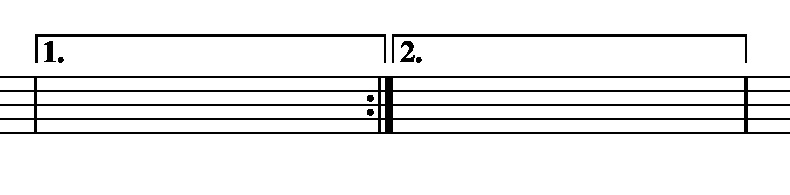
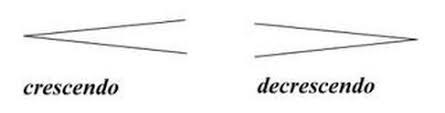
This first part consists of twenty-two chapters covering basic musical concepts and an introduction to the first note values and other expression markings, such as the dot.
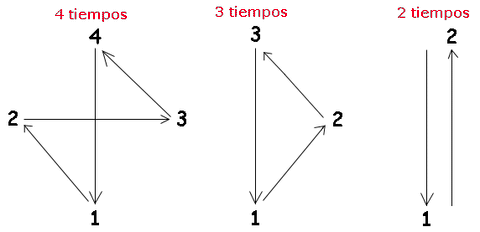
The student will also work through spoken sight-reading and sung sight-singing, as well as the first time signatures in simple duple, triple, and quadruple meters.
In this way, the fundamentals of music for beginners are as solid as you could possibly hope to find.
Part 2: A Deeper Look at Intervals, Scale Degrees, Scales, and Other Musical Markings
In this part of the complete music theory for beginners, the student will learn the essentials of scales and scale degrees, from the major second all the way up to the major seventh and the perfect octave.
At the same time, ascending and descending intervals will no longer be a mystery to the future teacher, because Rubertis explains them masterfully in his book.
Likewise, you'll learn about tempo markings such as the fermata, giving you your first sense of how long a held note or rest can last in time.
Finally, in this section the student will learn about scale alterations together with compound time signatures, and will be able to work them out on their own in every possible key and time signature.
There is one caveat, however, and that is that it discusses the double-sharp symbol, which has largely fallen out of use today unless you're dealing with a composition from the 15th or 16th century; it is not used in modern compositions.

Part 3: Building Scales, Intervals, and Harmonic and Melodic Forms, Among Others.
In this final part of the music theory for beginners book, the future teacher will consolidate their knowledge of scales by building them from scratch. They will also tackle the harmonic and melodic forms.
In this way, the foundations of music theory for beginners are as complete as can be, and you'll gain solid knowledge to carry on with your training to the fullest.
Now then, are you ready to download the complete book? We had you in mind, which is why we're making it free to download.
Remember that you can reach out to us and bring us any questions you may have about music theory for beginners.
7 Comments