Let's Talk About Sound!

If we're studying music, it's impossible not to talk about sound, since it's one of music's fundamental pillars. In one way or another, sound has always been a part of human life, becoming an important part of our daily routine. To learn what sound is, along with its qualities, keep reading this new article.
What Is Sound?
Sound is defined as the sensation produced in the ear as a result of the vibrating motion of objects at a given moment, and it is transmitted through waves that travel across the air.
According to experts, sound can be classified as long or short, soft or loud, high or low, and even pleasant or unpleasant—although this last classification tends to be subjective, since it depends on each person's perception of what they're hearing.
The Qualities of Sound
Pitch
A sound can be high or low depending on the frequency of the sound waves, which is measured in hertz (Hz).
When the frequency is low, the vibration is slow, which results in a low-pitched sound; but if the vibration is fast, the frequency is high, which is why the sound is high-pitched.
For a sound to be perceived, it must fall within the range of 20 to 20,000 Hz. Those below 20 Hz are called infrasound, while those above 20,000 Hz are considered ultrasound.
Intensity (Dynamics)
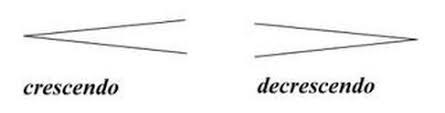
This is the power with which each sound is produced; generally, sounds tend to be loud or soft at any given moment.
Intensity is measured in decibels. For these sounds to be comfortable for the ear, they should range from 0 dB up to less than 140 dB. Sounds with higher decibel levels (above 140 dB) can be harmful to the ear.
Timbre
This is the quality that allows us to precisely identify what is producing a sound; in other words, thanks to timbre we can tell a violin apart from a guitar or a piano, for example.
Duration
Each sound lingers in the air for a different length of time; some can be longer or shorter than others. Whether a sound is sustained or not depends on the instruments used to produce it, as well as on physical factors such as the space in which it is played.
Among the instruments that can sustain sound continuously are the bowed string instruments (violin, viola, cello, or double bass); conversely, those that produce short sounds include the piano, percussion instruments, and others.
If these sounds are produced in an enclosed space, they can remain within that space, giving them a longer duration; whereas if they are produced outdoors or in a space with poor acoustics, the sound fades away more quickly.
As we noted at the beginning, the study of sound is vitally important for learning music, so the best advice is to read and research everything you can on this subject.