Suzuki Piano Method: Books 4 through 7

We've already covered the first three books of this method, so now we'll walk you through the Suzuki Piano Books 4 to 7.
In these books you'll reach a new level of performance and expressiveness, because they tackle pieces that aren't arrangements but are presented in their original form. As a result, the developing pianist will have to put in a little more effort in the lessons ahead.
Reasons to choose the Suzuki Piano method
Even though there are many methods out there, the Suzuki Piano method stands out from that whole mountain of written knowledge because it takes a different approach.
In this regard, the Suzuki Piano method has the following strengths:
- It begins with arrangements of classic songs, which makes studying easier.
- It uses pieces that are part of our shared cultural knowledge, which helps the student connect the sounds.
- It addresses technical aspects with increasing difficulty. This way the student can build their skills step by step.
- Its educational approach is a blend, combining elements of rote learning and meaningful learning. Suzuki Piano is therefore a method with deep educational value that aims to meet the student's needs.
For this and many other reasons, the Suzuki Piano method is excellent for students who, for whatever reason, feel they don't have natural talent and instead need to develop it.
Books 4 through 7 of the Suzuki Piano method
These four books that we still have left to look at and make available for you to download have a wealth of teaching value that you'll definitely need.
So don't miss what we have to share.
Book 4
This book places special focus on the Mozart Minuet and the work of Bach. You'll also find a Beethoven composition that no Suzuki Piano study method can do without.
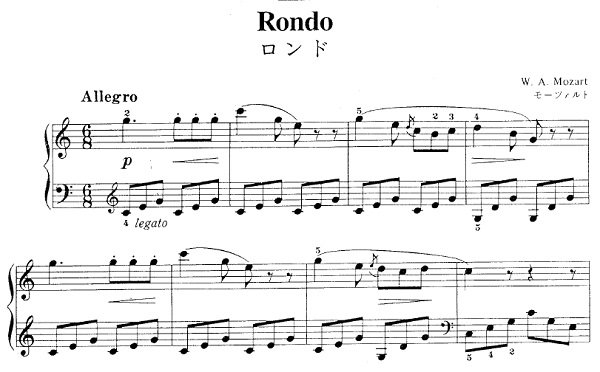
The first piece you'll come across is Mozart's Rondo, which is marked by a steady, ongoing motion in the left hand. This helps the developing pianist gain greater confidence with the bass hand.
The next composition is a set of Minuets, namely I, II and VIII, for a Mozart trio.
What makes these pieces special? Quite a lot, actually, because they'll help you lock in your tempo and your movements. They also carry a certain difficulty in the left-hand motion, which is the weakest for new pianists.
Finally, you'll have an encounter with the compositions of Bach and Beethoven. Which ones? From Bach you'll find the Musette, played in an exceptional Allegro con brio. And from Beethoven you'll need to learn the Sonata Op. 49, No. 2 in Allegro ma non troppo.
Book 5
This Suzuki Piano book consists of ten compositions designed to train expressiveness.
On this point, it's well known that among pianists, expressiveness can seem unimportant. That's because there's an almost one-sided focus on technique, but in the case of Suzuki Piano, expressiveness is vital to your development.
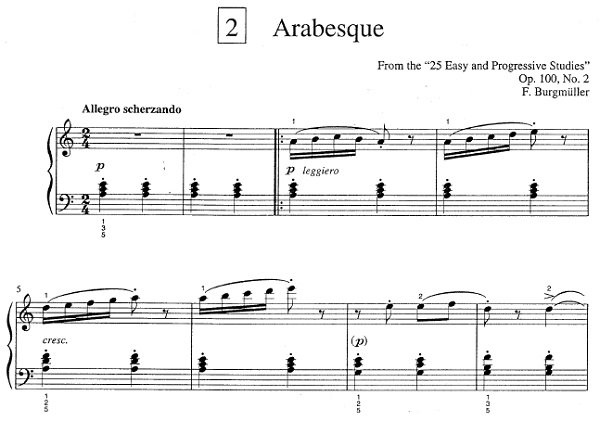
You'll therefore learn the harmonic simplicity of Für Elise, but with all of its expressive richness. You'll also find Burgmüller's Arabesque and Beethoven's Sonatina in F major, among others.
This sets the stage for the more demanding books, six and seven. So by the time you reach those volumes, it means you've already attained the expected level of expressiveness.
Remember that we're providing the books in PDF format so you can download them and keep up with your training.