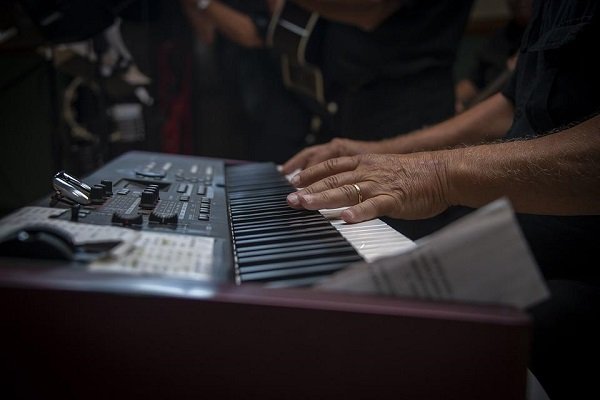
The Suzuki Piano Method

For many years, the Suzuki Piano Method has proven to be one of the best and most complete approaches for developing skills that aren't innate.
That's exactly why it's worth examining this method and making it available to all of our users.
If you think you don't have a natural talent for the piano, today is your lucky day, because we'll walk you through everything you need to know about the best method for starting your studies: the Suzuki Piano Method.
Shinichi Suzuki
Shinichi Suzuki was a violin teacher born in Nagoya, Japan, toward the end of the 20th century. His central idea was that music is not an innate talent, but rather something that can be learned like any other skill acquired through practice.
From this principle, he developed his violin study method, which other educators later adapted for many instruments, among them the Suzuki Piano Method.
What is the Suzuki Piano Method?
It's a method that, starting with the very first book, explains the fundamentals of piano through adaptations of short piano pieces.
As you move through each piece, the level of difficulty increases, because the whole method is built around practice.
In short, Suzuki's educational approach is based on memorization and repetition with strong behaviorist foundations, though it also has real meaning for the student, since the study pieces are works that are part of popular culture.
The books of the Suzuki Piano Method
The Suzuki Piano Method consists of seven books. It begins with the most basic material, using pieces arranged to be played in a single clef, the treble clef. As you progress, each lesson and each book grows more challenging.
Suzuki Book 1
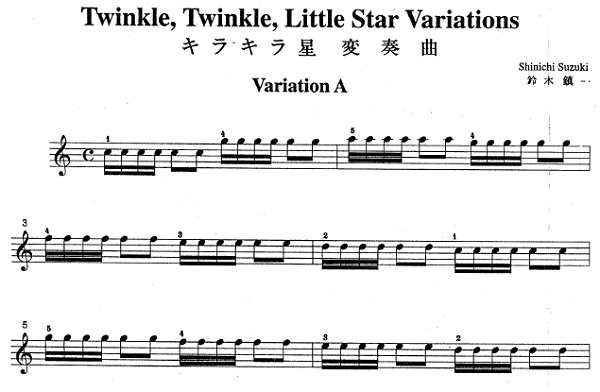
The first book of the Suzuki Piano Method opens with its earliest lessons played first in treble clef for the right hand, and then in bass clef for the left hand.
This way, the student doesn't use both hands right from the start, but instead practices each hand independently before bringing them together on the same piece in the lessons that follow.
In this book you'll find pieces such as:
- Twinkle, Twinkle, Little Star.
- Honeybee.
- Cuckoo.
- Row, Row, Row Your Boat.
- French Children's Song.
- London Bridge.
Among many others that will steadily improve your music reading and theory while helping you develop greater independence between your hands.
Suzuki Book 2
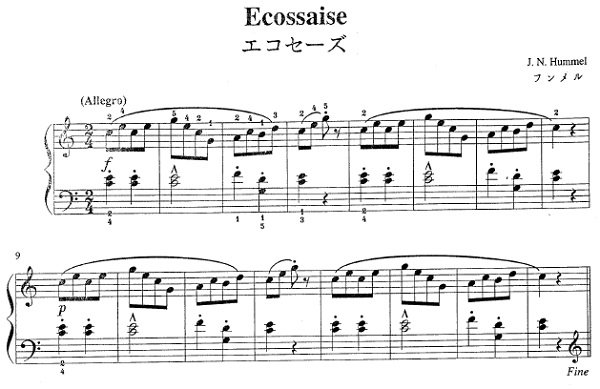
Starting with Suzuki Piano Book 2, you'll begin working on second-level pieces that build your muscular control, while your overall dexterity continues to grow.
To help you reach these goals, you'll find arrangements of pieces such as:
- Ecossaise.
- A Short Story.
- The Happy Farmer.
- Minuet 1, 2 and 3.
- Mozart's Minuet K. 2.
- Beethoven's Sonatina.
Suzuki Book 3
In Suzuki Piano Book 3, the method starts to move away from excerpts and arrangements so that the student can play complete, more demanding pieces.
As a result, you'll be studying compositions such as:
- Sonatina Op. 36, No. 1 by M. Clementi, in its Allegro, Andante and Vivace movements.
- Sonatina Op. 55, No. 1 by Fr. Kuhlau, in its Allegro and Vivace movements.
Along with other pieces, at this point you'll notice you're no longer a beginner.
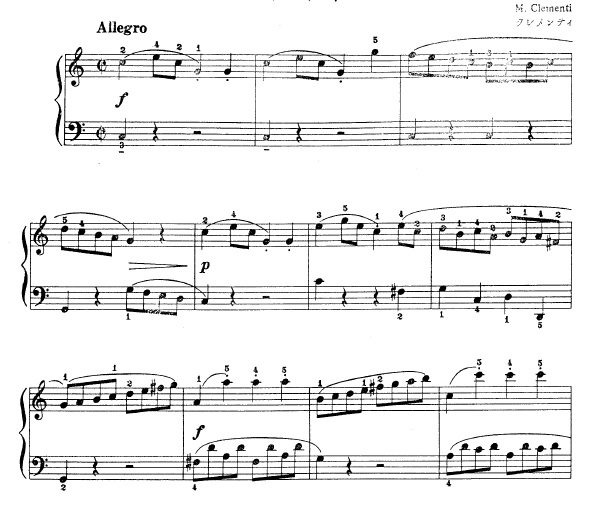
As a reminder, you can download Books 1, 2 and 3 in PDF format so you can start practicing right away.
1 Comments