Progressive Rock Piano Study Guide
Curious about progressive rock piano? This time we're sharing the best study method to help you take your very first steps in one of the most demanding styles in the world.
Rarely in any era has the piano been so challenging to play. In fact, only during the great periods of chamber music did the piano reach this level of difficulty.
That's exactly why progressive rock piano is considered the summit that every pianist should aspire to if they want to reach the highest technical and interpretive level within this subgenre of rock.
What is progressive rock?
Progressive rock is a combination of everything that is complex, difficult, monumental, and beyond anything you can imagine.
In other words, you need to be familiar with a wide range of styles and develop an absolutely killer technique just to play a progressive rock piano piece halfway decently.
In this subgenre of rock you'll find the following styles all blended together:
- Baroque counterpoint.
- Classical-era harmony.
- Movements from modern chamber music.
- Rock.
Mind-blowing, right? But that's still not all, because you'll also find:
- Jazz.
- Blues.
- Fusion.
- Funk.
- R&B.
- Rock ballad.
And these are just the beginning, there are countless more genres that get mixed into progressive rock piano.
Why progressive rock piano matters
The progressive rock piano plays a vital role within this subgenre because it contributes so many essential elements, such as:
- Harmony.
- Melody.
- Feeling.
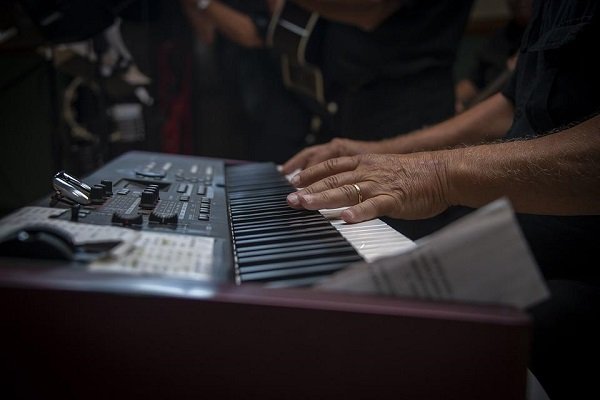
- A wealth of effects, since players use a digital synthesizer, the most technologically advanced modern version of the piano.
Today, thanks to the rise of technology, the piano has gone digital and packs in thousands of sounds. In fact, it's no longer even called a piano, but rather a digital synthesizer or keyboard workstation.
A few examples of these new pianos include:
- The Korg Pa5X, with 88 weighted keys and realistic touch-sensitive action featuring ivory-feel construction.
- The Roland Fantom and Jupiter X.
- The Nord J3PO.
Among many others, but these are the flagship workstations that the greatest progressive rock piano players rely on to create.
The best progressive rock pianists
Of course, there are plenty of progressive rock piano heroes around today.
Some of the ones who have influenced us most are:
- Jordan Rudess: the keyboardist of Dream Theater. He has formal academic training, which is why his technique is solid and consistent, yet he also loves technology, cutting-edge gear, and innovation.
- Michael Pinnella: the keyboardist of Symphony X. He began studying classical piano at the age of six at Montclair State University.
- Kevin Moore: besides being a keyboardist, he is also a psychiatrist. He played with Dream Theater, Chroma Key, and the band OSI.
- Jens Johansson: regarded as a shred hero, he is part of progressive rock piano history through his work with legendary musicians such as Yngwie Malmsteen, Dio, and Ritchie Blackmore.
This is the cream of the crop, the living legends of progressive rock piano. So if you're going to start listening to a few pianists, these are the ones to go for.
A progressive rock piano method
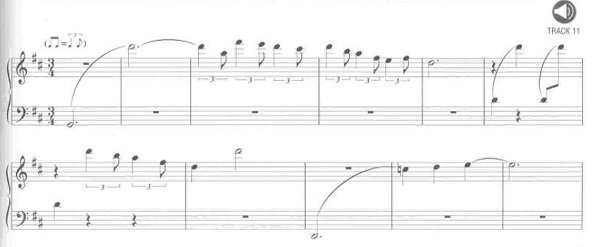
To help you begin your progressive rock piano studies, we're sharing the Hal Leonard method "Progressive Rock Keyboard".
This comprehensive guide is perfect for new students. So go ahead and download it in PDF format to kick off your progressive rock piano journey.