Electric Bass Exercises
The time has come to take your first steps as a player with the best electric bass exercises you'll find anywhere.
It's widely understood that the bass is not an easy instrument to play. On top of that, it demands a high level of musicianship to really anchor the harmonic foundation of a song.
That's exactly why it's so important to develop the highest possible level of technique and independence in every finger.
So let's walk you through the best method for working on your electric bass technique.
Why are electric bass exercises so important?
There are plenty of reasons, and we'll lay them out for you:
- Bass strings are thick, and you need to learn how to master them.
- Every great bassist needs to develop flawless fingering.
- Many bass techniques call for real finger strength.
- Only with solid technique and muscular strength will you be able to handle the demands of the best bass lines and compositions.
If you want to become a truly professional bassist, then you'll need to build muscular strength, independence, and technical command at the very highest level.
That's why electric bass exercises matter so much.
Bassists with Olympic fingers
There are plenty of bassists out there who have developed truly Olympic fingers. Thanks to their skill and strength, they've become the players everyone looks up to on the electric bass.
The most important ones, the ones setting the trends, are:
- Victor Lemonte Wooten.
- Wojtek Pilichowski.
- Marcus Miller.
- Abraham Laboriel.
- Miki Santamaría.
- Billy Sheehan.
- Sergio di Finizio.
There are many more, of course, but we think these are a great place to start as you take your first steps toward strengthening your electric bass technique.
The best method of exercises for electric bass
To give you the best possible start in building up your technique, we're convinced you need the best method of electric bass exercises out there.
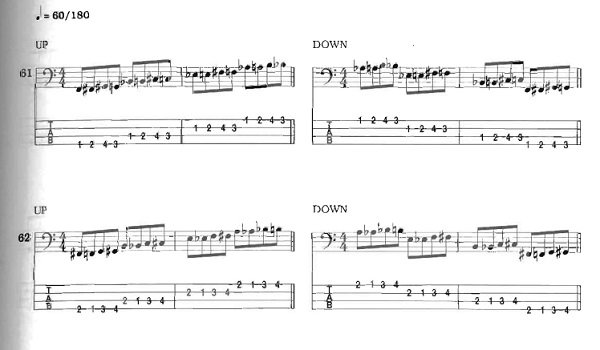
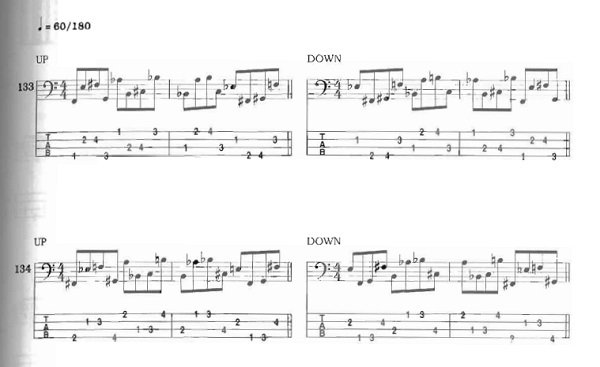
That's why we recommend “Bass Fitness,” a collection of patterns designed to develop independence as well as muscular strength in your hands and fingers.
In short, the book is made up of ten chapters, including:
- Moving across the fretboard to learn the positions and build speed shifting between frets along its full length.
- Variations on the basic exercises to gain greater independence and ergonomics.
- You'll be able to practice something close to an exercise known as “the Spider,” which is the most challenging of them all. It isn't in this book, but you'll work on something very close to it so you can take your first steps.
- String skipping, along with ascending and descending movements over musical intervals.
- Variations on string skipping combined with skips between frets. These exercises will help you stretch your fingers without hurting yourself.
Among many other electric bass exercises, this method will no doubt become your go-to companion throughout your practice sessions.
Tips for your practice sessions
- Set aside at least one hour and ten minutes to practice.
- The first ten minutes of every session should be stretching to ease the tension on your tendons.
- Spend 30 minutes of your electric bass practice on Bass Fitness exercises.
- Devote at least 30 minutes to working on technique. By technique we mean bending, slides, slap, pull-offs, hammer-ons, hammer-offs, tapping, and more.
Remember, we've left you the Bass Fitness book in PDF format so you can download it.