Basic Electric Bass Method

This time we're giving you a basic electric bass method so you can start from scratch, but with the best possible foundation.
Many people have come to underestimate this instrument, but reaching a decent level on it is no easy feat. This is largely because bassists like Victor Wooten have done such exceptional work.
From now on, then, you'll have at your fingertips the simplest and most complete study method on the entire web for basic electric bass.
Parts of the Electric Bass
You could say the electric bass breaks down into two broad areas:
The Physical Side
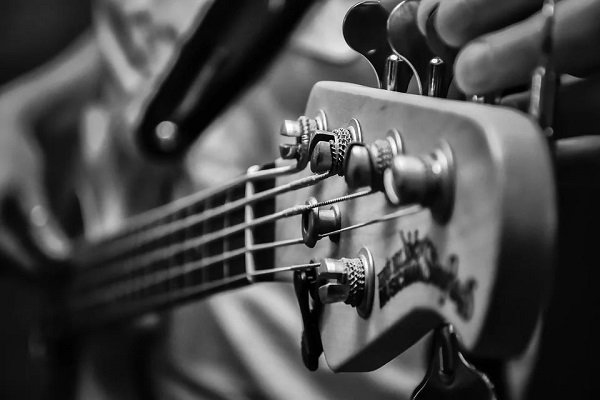
This is the electric bass itself, which is made up of:
- A wooden body that can be made of many materials, but is always solid.
- Neck.
- Fingerboard.
- Frets.
- Headstock.
- Tuning pegs, which can number four, five, or six, although some basses have up to 16 pegs and therefore sixteen strings.
- Pickups.
- Nut.
- Capo.
- Tuning machines.
- Electronics.
The Technical Side
- Thumb.
- Pluck.
- Triplex.
- Scales.
- One- and two-handed tapping.
- Natural and artificial harmonics.
- Muting.
- Palm muting.
- Combinations of all of the above.
Electric Bass Sheet Music
When studying the electric bass, it's always recommended that you learn to read sheet music. That way you'll have access to the best and most complete study guides.
Now, music for electric bass is written using:
- The traditional staff of five lines and four spaces. It also has additional ledger lines and spaces above and below.
- The bass clef, in which the line names from bottom to top are G, B, D, F, and A, while the spaces are A, C, E, and G when read ascending.
Likewise, musical note values are used to indicate the rhythmic subdivisions, along with expression markings and dynamics.
We invite you to check out our posts on music theory, sight-reading, and others on harmony that are available here on our site.
Basic Electric Bass Method
To help you get off to the best possible start, we're sharing the basic electric bass method written by Gustavo Gregorio.
We really like this method because it feels down to earth, it's written in simple language, easy to understand, with no unnecessary complications.
In the same way, the format it was published in gives the impression that one day Gustavo woke up, started writing in his notebook, and then published it. In other words, there are no fancy frills that get in the way of understanding it.
In this method you'll find the following.
Basic Elements of the Bass
It explains all the parts of the electric bass so you can get to know it physically and take your first theoretical steps.
Scales on the Electric Bass
It includes a fairly complete collection of scales that you're sure to love. What's more, it's easy to follow thanks to how clearly it's written.
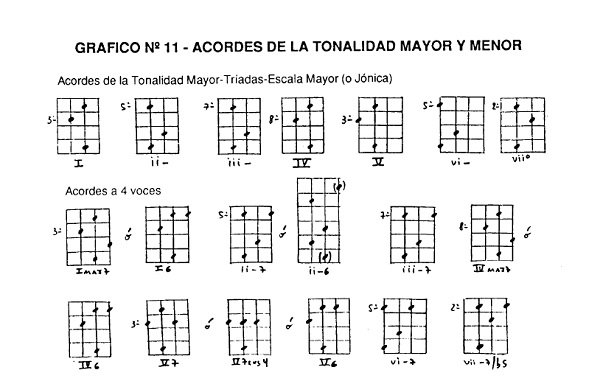
Chords
You'll find a fairly extensive list of bass chords, because yes, on the electric bass you can and should play chords too.
Performance Techniques
Plenty of performance techniques so you can build up a repertoire of technical and expressive tools that will enrich your playing.
You can download the book as a PDF along with the audio in MP3 so you have excellent audiovisual support to back you up.